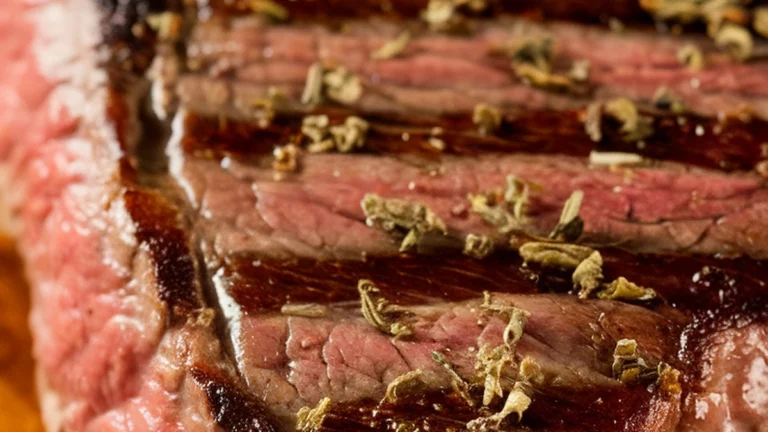
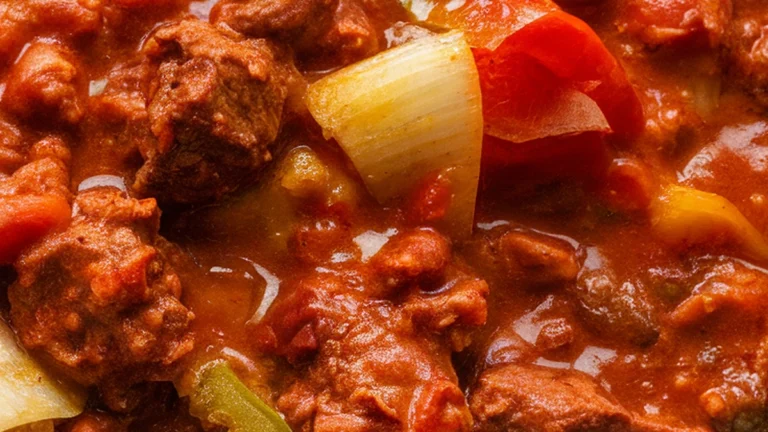
Awaze Tibs (Spicy Ethiopian Meat Stir-Fry)

Introduction
Awaze tibs is an Ethiopian stir-fry built on a foundation of berbere spice, soy sauce, and vinegar—a balance of heat, umami, and acid that coats tender meat and sweet onions. This one-skillet dish comes together in about 30 minutes and works equally well as a weeknight dinner served over injera or rice, or as a make-ahead lunch component.
Recipe Details
- Prep Time: 15 minutes
- Cook Time: 15 minutes
- Total Time: 30 minutes
- Servings: 4
Ingredients
- 2 tablespoons vegetable oil
- 1.5 pounds beef or lamb, thinly sliced
- 1 large onion, thinly sliced
- 3 cloves of garlic, minced
- 2 tablespoons berbere spice
- 1 tablespoon tomato paste
- 1 tablespoon paprika
- 1 tablespoon cayenne pepper, or to taste
- 1 tablespoon awaze sauce
- 1 tablespoon soy sauce
- 1 tablespoon vinegar
- 1 teaspoon salt, or to taste
- Fresh cilantro, chopped, for garnish
Instructions
- Heat the vegetable oil in a large skillet or wok over medium-high heat.
- Add the thinly sliced meat to the hot skillet and stir-fry for 3-4 minutes until browned and cooked through. Remove the cooked meat from the skillet and set it aside.
- In the same skillet, add the sliced onion and minced garlic. Stir-fry for about 2-3 minutes until the onion becomes translucent and fragrant.
- Add the berbere spice, tomato paste, paprika, and cayenne pepper to the skillet. Stir well to coat the onions and garlic with the spices.
- Return the cooked meat to the skillet and toss it with the spiced onion mixture.
- Add the awaze sauce, soy sauce, vinegar, and salt to the skillet. Stir everything together to combine the flavors and coat the meat evenly.
- Continue to stir-fry for another 2-3 minutes until the sauce thickens and coats the meat.
- Taste the dish and adjust the seasoning with salt or additional spices according to your preference.
- Remove the skillet from the heat and garnish the with freshly chopped cilantro.
Variations
Vegetable-forward version: Add 2 cups of diced green or red bell peppers and 1 cup of mushrooms in step 3, alongside the onion and garlic. The peppers soften into the sauce while the mushrooms add earthiness and bulk.
Lamb and potato tibs: Cut 1 pound of potatoes into small cubes, parboil for 5 minutes, then add them in step 5 alongside the returned meat. They’ll absorb the spiced sauce and provide a starchier, more filling base.
Milder heat level: Reduce the cayenne pepper to 1 teaspoon and use half the amount of berbere spice. Add an extra tablespoon of tomato paste for depth without the bite.
Chicken tibs: Swap the beef or lamb for 1.5 pounds of chicken breast, thinly sliced. Reduce the stir-fry time in step 2 to 2–3 minutes, as chicken cooks faster. The lighter meat pairs well with the assertive spices.
Greens finish: Stir in a handful of fresh spinach or kale just before serving in step 9. It wilts into the hot sauce and adds a pleasant bitter contrast to the rich meat and spices.
Tips for Success
Don’t skip the separate searing step. Removing the meat before the onions cook prevents it from steaming and allows both components to develop proper color and texture. You’ll recombine them once the aromatics are fragrant.
Watch the onion color. Translucent onions mean they’re softened but still have some structure—this is the right moment to add the spice paste. If they brown too fast, lower the heat slightly.
Add liquid sparingly if needed. If the sauce reduces too quickly and the meat looks dry before step 8, add a tablespoon or two of beef or lamb broth to keep everything moist while the flavors meld.
Taste at the end, not during cooking. The salt and spices intensify as the sauce reduces, so hold off on major seasoning adjustments until step 8, when you can take a proper taste and adjust with precision.
Cilantro matters here. The fresh herb cuts through the heat and richness. Don’t skip it or replace it with parsley—its bright, slightly peppery flavor is part of the dish’s balance.
Storage and Reheating
Awaze tibs keeps in an airtight container in the refrigerator for 3 to 4 days. The flavors actually deepen overnight, making it ideal for meal prep.
FAQ
Can I prepare this ahead to save time on a busy weeknight?
Yes. Slice the meat, onion, and garlic the morning before, store them separately in the fridge, and measure out the spices into a small bowl. Once you heat the oil, the entire cook is 15 minutes.
What if I can’t find awaze sauce—is there a substitute?
Awaze is a chili-vinegar sauce, so you can approximate it by mixing 1 tablespoon of hot sauce (sriracha or a similar fermented chili paste) with 1 teaspoon of vinegar. Stir it in during step 6. The flavor won’t be identical but the heat and tang will carry the dish.
Should I use beef or lamb, and does it change the cooking time?
Both work equally well. Beef is milder and more neutral; lamb brings a richer, slightly gamey depth that pairs beautifully with berbere. Use tender cuts (sirloin, tenderloin, or leg) and cooking time stays the same at 3–4 minutes.
Is this gluten-free?
Yes, if you use a certified gluten-free soy sauce. Standard soy sauce contains wheat, so read the label or swap it for tamari.
Attribution: Recipe text from “Cookbook:Awaze Tibs (Spicy Ethiopian Meat Stir-Fry)” on Wikibooks (© Wikibooks contributors).
Source: https://en.wikibooks.org/wiki/Cookbook:Awaze_Tibs_(Spicy_Ethiopian_Meat_Stir-Fry)
License: CC BY-SA 4.0 — https://creativecommons.org/licenses/by-sa/4.0/
Additions: Editorial additions and formatting changes were made for clarity and usability. Ingredients, instructions, and other sections may be adapted where appropriate.